
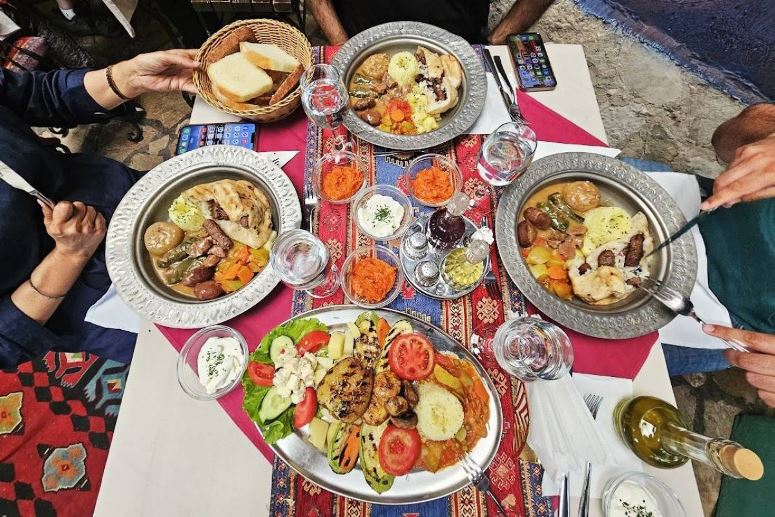
The Balkan Peninsula, a land where cultures meet and history speaks through every stone, also tells its story through food. Balkan culinary traditions are a mosaic of influences — Turkish, Greek, Slavic, Austro-Hungarian, and Middle Eastern — all blending into a rich and diverse gastronomic heritage. What makes this cuisine remarkable is its ability to combine simplicity with depth, bringing families and communities together around the table.
Meals in the Balkans are not just about eating; they are about sharing. Food is central to hospitality, celebrations, and everyday life. Whether you sit down for breakfast or brunch in a small village, enjoy a rustic lunch in a family kitchen, or attend a festive dinner in a city, each dish carries layers of cultural memory and meaning.
One of the defining features of Balkan cuisine is its reliance on fresh, seasonal, and local ingredients. Vegetables like peppers, tomatoes, and eggplants dominate the table, while dairy products such as yogurt, kaymak (a rich cream), and various cheeses play essential roles. Grilled meats are staples — cevapi, kebabs, and roasted lamb are beloved across the region. Yet vegetarian dishes such as stuffed peppers, bean stews, and savory pies remain equally significant, reflecting the agrarian roots of Balkan societies.
Bread has a sacred place at the Balkan table. Often baked daily, it accompanies nearly every meal and symbolizes generosity and community. In many rural households, guests are still greeted with warm bread, salt, and homemade rakija (fruit brandy), a ritual that embodies the spirit of hospitality.
Sweets are equally treasured. From honey-drenched baklava to fluffy krempita and fragrant rose jams, desserts carry the echoes of Ottoman kitchens and Central European patisseries. Coffee, especially the slow-brewed Turkish-style variety, is not just a drink but a ritual — an invitation to pause, converse, and connect.
What makes Balkan culinary traditions truly special is the balance between continuity and adaptation. Recipes are often handed down through generations, yet each household adds its own touch, making even familiar dishes taste uniquely different. Food here is not static but alive, evolving while keeping its roots intact.
Exploring Balkan cuisine means discovering more than flavors; it is an encounter with history, community, and identity. To sit at a Balkan table is to take part in centuries of tradition — where every bite tells a story of resilience, creativity, and shared joy.